Matchifi turns your membership into an active marketplace, where mentoring drives engagement and premium member visibility creates measurable value and new revenue.
Professional associations and membership bodies are under growing pressure to demonstrate value.
Members expect more than events, newsletters, and static directories. Boards want evidence of engagement. Sponsors want measurable outcomes. And members themselves increasingly judge their membership by one question:
“Does this help me progress?”
Mentoring has long been one of the most powerful answers to that question. But for many organisations, mentoring programmes are still difficult to manage, hard to scale, and almost impossible to measure.
This is where the idea of a mentor matching platform changes everything.
Rather than running mentoring as a manual programme layered on top of your organisation, associations are beginning to treat mentoring as digital infrastructure: something built into the way members connect, interact, and create value.
This guide explains how associations are using mentor matching platforms to increase engagement, reduce administration, and create new membership benefits — and how platforms like Matchifi make this possible.
Most associations already have what startups spend years trying to build: a trusted network.
You have verified members, shared standards, professional credibility, and an audience that actively wants to learn from one another. Yet in many organisations, the way members find each other is still outdated.
Directories are browsed. Profiles are skimmed. Introductions happen manually by email. Sessions are arranged in private calendars. Outcomes are invisible to the organisation.
From the outside, activity appears low. From the inside, staff are quietly coordinating introductions and answering “can you recommend someone?” messages.
A mentor matching platform changes this dynamic.
Instead of listing people and hoping connections happen, the platform actively facilitates them. Members describe what they need, mentors describe what they offer, and the system guides both sides to a match. Booking, reminders, and reporting happen automatically.
At that point, mentoring stops being a background initiative and becomes part of how the association operates.
Most mentoring schemes start the same way: with good intentions and spreadsheets.
Staff collect applications, review profiles, attempt to pair people manually, send emails back and forth, and try to keep track of who met whom. As the programme grows, complexity grows with it.
Matching becomes slower. Admin increases. Response times stretch. Data becomes fragmented across inboxes and documents. Eventually, participation drops not because mentoring lacks value, but because the process becomes friction-heavy.
Members experience delays. Mentors receive unclear requests. Coordinators burn time on logistics rather than quality.
A mentor matching platform removes this bottleneck. Matching logic is structured. Availability is visible. Bookings happen directly between members. The organisation regains time while members gain momentum.
More importantly, mentoring becomes accessible to more people, not just those who know how to navigate the system.
The most successful associations no longer treat mentoring as a side project. They treat it as infrastructure.
That means:
Mentoring is always available, not limited to annual cohorts.
Members can join or request support when they need it.
Sessions are booked in minutes, not weeks.
Activity is recorded automatically.
Outcomes are measurable.
With a platform like Matchifi, mentoring lives inside your organisation’s digital environment, branded as your own service, configured to match your structure, and aligned with your membership model.
This is what enables associations to support two powerful use cases from the same foundation:
We’ll explore the second model in Part 2. First, let’s look at why the first is so transformative.
When mentoring becomes structured and self-service, several things happen quickly.
Members request help more often, because the process feels simple and private.
Mentors participate more consistently, because expectations are clear and sessions are scheduled professionally.
Staff regain time, because they are no longer acting as intermediaries.
And crucially, the association can finally see what is happening.
Instead of relying on anecdotal feedback, you can measure:
How many mentoring sessions take place.
How many members participate.
Which topics are most in demand.
How often members return for further sessions.
How engagement changes over time.
Mentoring becomes visible.
For boards and senior leadership, engagement is only meaningful if it can be demonstrated.
A mentor matching platform makes this possible by turning activity into data.
Rather than saying, “We run a mentoring programme,” associations can show:
Participation growth quarter by quarter.
Session completion rates.
Active mentors and mentees.
Retention differences between members who mentor and those who don’t.
Programme adoption by membership tier or region.
This transforms mentoring from a “soft benefit” into a measurable asset.
It also changes how mentoring is funded and prioritised. When outcomes are visible, mentoring moves from a cost centre to a strategic investment.
Associations that struggle with digital mentoring usually fall into the same traps.
They replicate manual processes online instead of redesigning the experience.
They give members too many options without guidance.
They require staff approval for every step.
They launch without defining what success looks like.
The result is often a platform that exists, but isn’t used.
Effective mentor matching platforms work differently. They guide members through a small number of clear steps. They remove unnecessary admin. They make booking the natural next action. And they define metrics from day one.
This is one reason Matchifi focuses on guided matching rather than open-ended search. The goal is not to show every possible mentor, but to help members find the right one quickly.
One of the biggest barriers associations face is the assumption that building a platform will take months.
Traditionally, this was true. Custom development meant procurement, specifications, integrations, testing, and ongoing maintenance.
With white-label platforms like Matchifi, that model disappears.
Associations configure their mentoring structure, invite members, and launch.
There is no software to build. No hosting to manage. No payment system to integrate. No calendar infrastructure to maintain.
Most organisations can move from concept to live platform in days.
This speed matters because it allows associations to test, learn, and refine their mentoring offer without long-term technical risk.
The first and most common use of a mentor matching platform is simple: enable more mentoring.
Members list themselves as mentors. Members request support. Sessions are booked and delivered. No money changes hands.
Yet the value created is significant:
New members integrate faster.
Junior professionals progress more confidently.
Senior members gain visibility and purpose.
The association becomes central to professional development.
Mentoring becomes something members use regularly, not something they read about in newsletters.
And once that infrastructure exists, a second opportunity opens.

Once an association has a successful mentor matching platform in place, it has already solved the hardest problem: enabling members to connect, book time, and meet in a structured way.
From there, it becomes possible to introduce a second, complementary use case using the same infrastructure.
This is where many associations create a new chartered or premium member benefit.
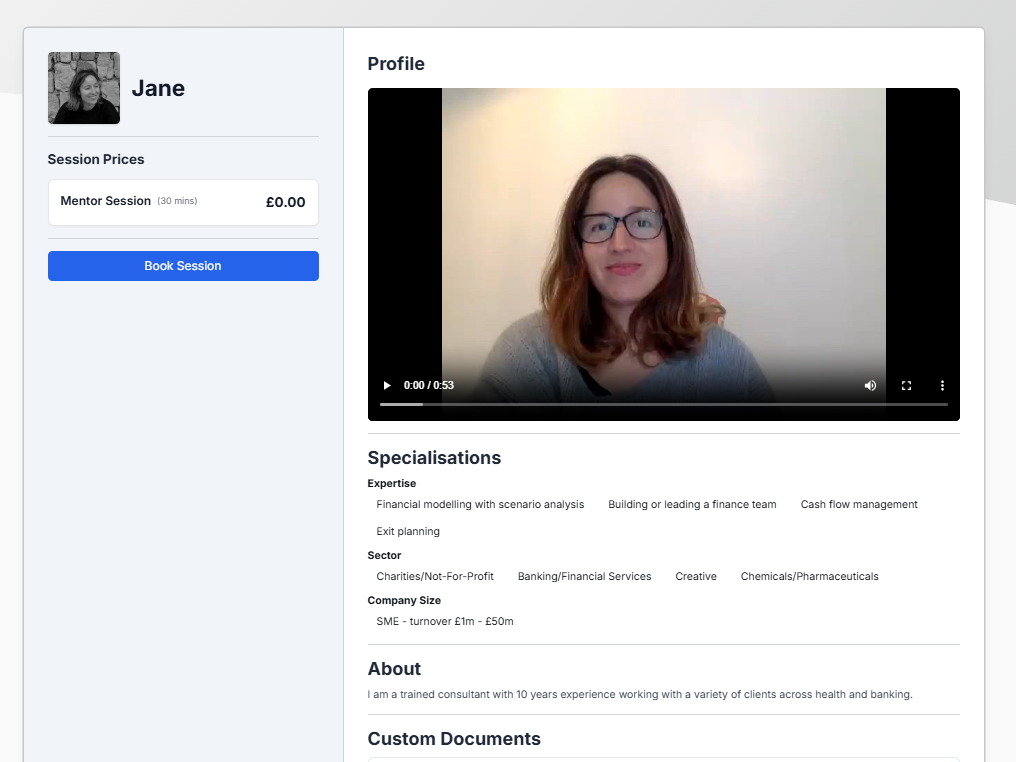
Instead of only facilitating free mentoring, the platform can also allow senior, chartered, or accredited members to list their professional services. Buyers can then find, match, and book them directly through the association’s branded platform.
The key difference is intent:
Mentoring supports development and engagement.
Premium member platforms support visibility, commercial opportunity, and revenue.
One builds community.
The other builds economic value.
Together, they transform membership from something people “belong to” into something that actively helps them progress and grow their business.
Most associations use Matchifi in two ways, across two platforms that sit on the same infrastructure:
Because both platforms use the same core system, they feel consistent to members, but they serve very different strategic purposes.
This separation is important. It keeps mentoring accessible and community-driven, while allowing commercial activity to sit in a clearly defined space.
For prospective members, this model is powerful.
Instead of saying:
“Join us for networking and professional development.”
You can say:
“Join us and get access to mentoring, and if you’re chartered or accredited, you also get a platform that actively helps you win work.”
Membership becomes:
This is particularly attractive for senior professionals who are deciding where to invest their time and fees.
In many associations, chartered or premium status is symbolic. It signals quality, but it does not always create opportunity.
A platform changes that.
Chartered members gain:
The association becomes not just a validator of quality, but a distributor of opportunity.
Once sessions are happening on-platform, revenue becomes measurable and optional.
Associations can choose to generate income through:
Importantly, nothing is forced. Associations control whether monetisation is enabled and how it works.
Some begin with free mentoring only.
Others launch paid platforms immediately.
Many phase revenue in once adoption is proven.
This flexibility is what makes Matchifi infrastructure, not a pricing model.
The biggest shift is conceptual.
Before:
The association facilitates connection indirectly.
After:
The association becomes part of the transaction flow.
That creates:
Engagement is no longer just “activity”. It becomes value creation that can be tracked, reported, and grown.
Directories show who exists.
Marketplaces enable interaction.
A directory:
A marketplace:
This is why associations using Matchifi don’t describe themselves as “running a directory” anymore. They run a person-to-person marketplace.
Traditionally, building this kind of platform required:
With Matchifi, associations configure rather than build.
They define:
Everything else is handled by the platform.
This means associations can move fast without risking technical debt.
Because both mentoring and premium services run on the same infrastructure:
This creates a compounding effect.
The more your members use the platform, the more value it generates for everyone involved.
Associations using this approach stop asking:
“How do we get members to engage more?”
And start asking:
“How do we turn engagement into outcomes?”
Mentoring builds loyalty.
Premium platforms build opportunity.
Together, they redefine what membership means.
Matchifi enables associations to:
Both run on the same infrastructure.
Both strengthen membership value.
Both support the future of professional associations.
You are no longer running programmes.
You are running a digital ecosystem where value flows between your members.
That is the difference between a directory and a marketplace.
Set up in minutes and start earning revenue. No set up fee - cancel anytime.
Book a Demo
.svg)
.svg)